 "
"
The South River emerges underground in East Point, Georgia, and flows 63 miles southeast to Jackson Lake, which joins the Yellow River and Alcovy River to form the Ocmulgee River. It flows through several primarily Black and brown communities to Jackson Lake.
In 2021 the South River was named the fourth most endangered river in the United States by American Rivers. It received this title from decades of sewage overflows, spills, leaks, and runoff from the City of Atlanta and DeKalb County, which continues to contaminate the South River today.
Dr. Jacqueline Echols, Board President of the South River Watershed Alliance, gave a presentation at the Park Avenue Baptist Church on environmental injustice, environmental racism, sewer spills, and pollution in the South River.
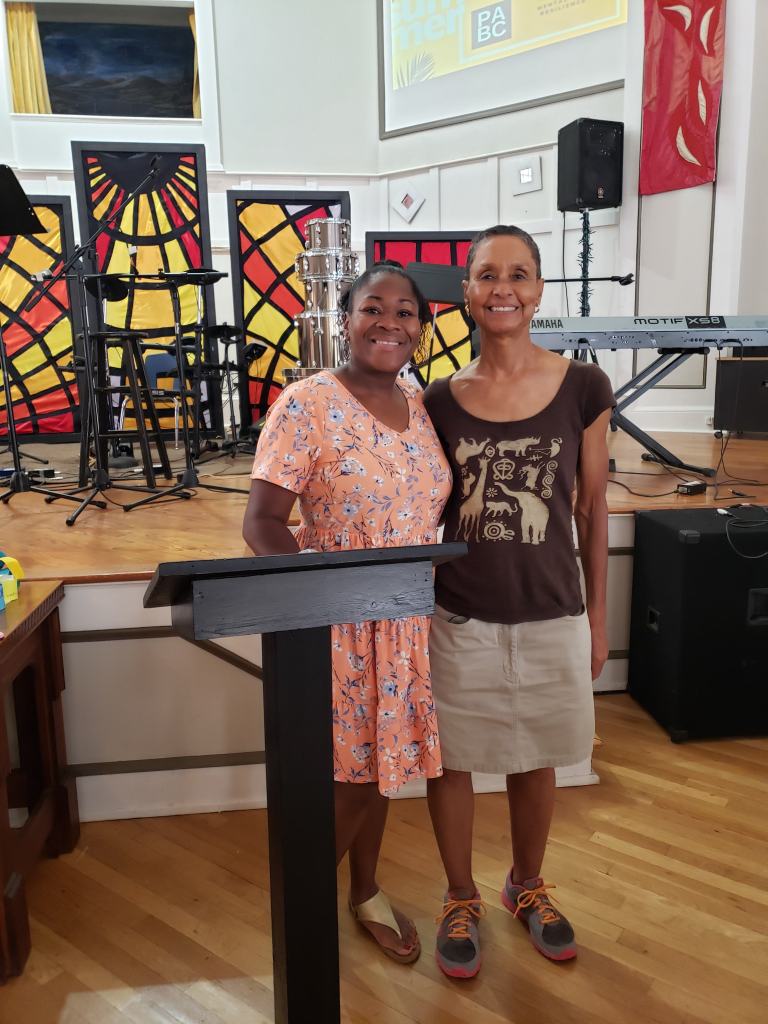
“It’s been a decades-long fight for low-income and marginalized folks in south DeKalb County that are predominantly Black and have been heavily impacted by pollution, environmental injustice, and environmental racism,” Dr. Echols said.
In 2010 DeKalb County negotiated a consent decree between DeKalb County and the U.S. Environmental Protection Agency (EPA) and the Georgia Environmental Protection Division (EPD) to stop the sanitary sewer overflows, spills, and leaks throughout the County that impacts the health of neighborhoods.
Only one-third of the people in DeKalb County live in North DeKalb’s predominantly white and wealthy neighborhoods that are getting a new sewer system.
South DeKalb is viewed as non-priority even though 69% of the county sewer lines are in this area, and most sewer spills. This is a violation of federal regulations in a predominantly black community.
South DeKalb County, where two-thirds of the predominantly black folks live, will not get a functioning sewer system but are responsible for paying for the new sewer system in North DeKalb.
The 12-year-old consent degree is the first in the history of the Clean Water Act where there is no deadline to fix the source of pollution.
“I have been asking for over ten years how do we have a consent decree that leaves out two-thirds of the County when that is where most black folks live. What we see in South DeKalb County is environmental injustice and environmental racism on steroids,” Dr. Echols said.
WHAT IS ENVIRONMENTAL RACISM
Environmental racism is a systemic issue and is global in scope. Black and low-income communities of color have long complained of being treated as dumping grounds for ecological polluters.
Civil Rights leader Dr. Benjamin Chavis, Jr. defined environmental racism as “the intentional siting of polluting and waste facilities in communities primarily populated by African Americans, Indigenous People, migrant farmworkers and low-income workers.”
Sociologist Robert Bullard expanded the definition of environmental racism to include “any policy, practice, or directive that differentially affects or disadvantages individuals or communities based on race.”
Studies show that Black communities are disproportionately exposed to fumes, toxins, ash, soot, and other pollutants from hazardous facilities located in their midst. As a result, they face increased risks of health problems like cancer and respiratory issues.
DEKALB COUNTY SEWAGE SPILLS
Pollution of the South River watershed in DeKalb began in 1961. Today, the river continues to suffer from Atlanta’s combined sewer system and DeKalb’s unregulated sewage spills. Here are some of the worst spills from: https://www.southriverga.org/history
January 2006 DeKalb County discharges ten million gallons of raw sewage into Snapfinger Creek, 200 yards from the confluence of the South River—one of the worst spills on record in metro Atlanta.
From February 2005 to March 2006, the Georgia EPD issued multiple consent orders for 241 sewage spills since 2004 and fined DeKalb over $400,000.
In September 2006, Georgia EPD ordered DeKalb County to pay $265,000 for 187 sanitary sewage overflows. Sewage spills listed in the settlement are 630,000 gallons and 400,00 gallons discharges into South River.
2007, 2008, and 2009: DeKalb had 542 sanitary sewer spills with fines over $720,000.
2010: South River’s water tested positive for fecal and PCB contamination. Polychlorinated biphenyl (PCB) chemicals were banned in the U.S. in 1979 because they harm human and environmental health. No swimming signs were posted on the South River.
2010: U.S. Environmental Protection Agency sues DeKalb County for violations of the Clean Water Act for illegal sanitary sewage spills.
2018 -2019 Sanitary sewage spills continued unabated.
Jan 2020: DeKalb County consent decree expires.
The low fines issued by Georgia EPD did not motivate the County to abide by the federal Clean Water Act.
A lot of those sewage overflows are full of untreated industrial waste. On average, at least 6 million to 13 million gallons of industrial waste – capable of causing disease and cancer – goes through communities in defective and leaky sewer lines every month, reported in https://www.justiceonchapelhill.org/.
“We are trying to preserve the environment, and it’s difficult in the face of an enormous amount of misinformation perpetrated by leadership in DeKalb County and the City of Atlanta. We expect better from our elected officials and should keep demanding better,” Dr. Echols said
THE CITY OF ATLANTA CONTRIBUTES TO THE POLLUTION
The City of Atlanta contributes to the pollution in the South River Watershed with its antiquated combined sewer system that mixes household sewage and stormwater in the same pipes. When it rains, this system dumps the stormwater overflow and sewage into neighborhood creeks, transforming them into open sewers. Atlanta’s combined sewer system affects Intrenchment Creek, which flows into the South River.
In 1996 the Olympics came to Atlanta. Mayor Bill Campbell decided to discharge the sewer system into Black neighborhoods south of the old Braves stadium, so tourists coming for the Olympics would not be disrupted by flooding. He promised to fix the combined sewer system once the Olympics left town, but that did not happen. The Summerville area has been flooding ever since, another example of environmental racism.
COP CITY IS A BACKROOM DEAL FEW WANT
In 2021 the 300-plus acres of the Old Prison Farm (OPF) property, initially planned for public green space, was suddenly and secretly leased to the Atlanta Police Foundation to build the most extensive police training facility in the country. Later dubbed Cop City by opponents, the facility will practice urban warfare with shooting ranges and bomb explosions that will produce more pollution.
Cop City was widely unpopular, except in Buckhead, a wealthy community in North Atlanta, but they did not want it in their neighborhood.
Days and hours of public testimony made it clear Cop City was not wanted in the South Atlanta Forest. Still, the Atlanta City Council and Mayor Andre Dickens ignored the public’s wishes and did what the wealthy corporations who fund the Atlanta Police Foundation wanted. They located Cop City in a predominantly Black community. A community that needs grocery stores, drug stores, doctors, restaurants, and so much more, but not Cop City.
During April 2023, the Atlanta Police Foundation destroyed over 85 acres of green space and trees – called the lungs of Atlanta- creating more sediment and pollution to run into streams, creeks, and the endangered South River.
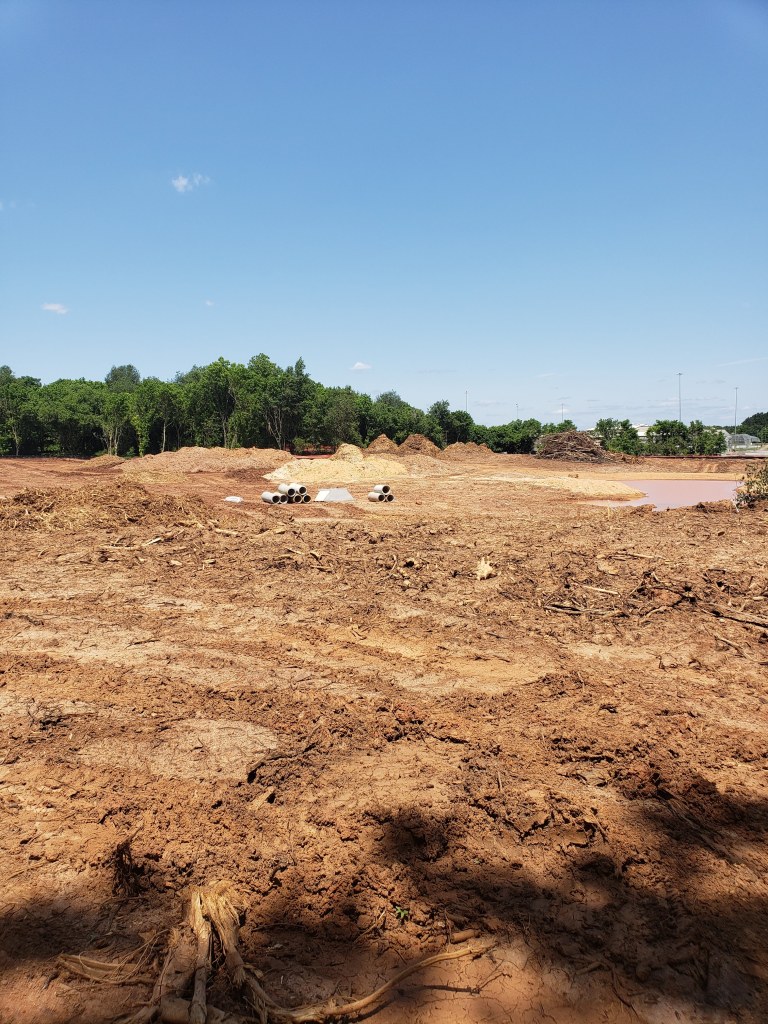
On May 28, I photographed one silt fence above a small stream lying on the ground. On July 31, I saw two silt fences above the small stream that goes under Constitution Road and empty into Intrenchment Creek that flows into the South River.

The automatic monitoring equipment at Constitution Road and Intrenchment Creek that monitors the turbidity of the water was turned off when bulldozing of trees began. It was the only one in Georgia that was turned off. It was turned off – not for safety reasons, as the public was told – but to make it seem like everything was okay so they could go ahead and build Cop City.
“We have monitoring data before the system goes offline. It confirms the sediment pollution runoff from the site. There were no retention detention ponds as required by regulation during the clearing period,” Dr. Echols said.
Intrenchment Creek is the boundary line between the Old Prison Farm property and Intrenchment Creek Park, now called Weelaunee People’s Park.
Lily Ponitz, an environmental engineer, was on the Community Stakeholder Advisory Committee but was removed from the Committee for telling the truth about misleading information and neglect by the Atlanta Police Foundation (APF). The APF did not thoroughly investigate the site for contaminants and avoided areas with known pollution and possible human remains. Read the complete report here https://atlpresscollective.com/2022/01/23/the-atlanta-public-safety-training-center-development-team-is-misleading-stakeholders-regarding-environmental-assessments-and-avoiding-due-diligence/?
Not only does the Atlanta Police Foundation not want accurate information about all the toxic pollution in the area, but they only want “YES” people on the Community Stakeholders Advisory Committee. Lies from the APF are slowly leaking out, just like the sewer spills, and it all stinks.
A river, dying from pollution, flows through southeast Atlanta and South DeKalb County. The creeks and the South River can be saved with responsible leaders who respect nature and the environment. But too many politicians respect money and unending development while they ignore climate change with increasing temperatures.
In the near future, trees and clean water will be more critical for our survival on this planet than money and unending development.
“Respecting and improving the environment is the key to it all: stopping Cop City, getting the test site back online at Intrenchment Creek, and implementing the Clean Water Act in South DeKalb County. If we can rescue the environment, we can rescue the community,” Dr. Echols said.
written and photos by Gloria Tatum
 Streets of Atlanta